



‘Did you know sailors and angels are homophones in Hebrew?’
— Daniel Kraus, Whalefall (2023), p. 77
IS BEING A SON ONLY THE DISAPPOINTING ANTITHESIS to being a daughter? The sole merit in trying to become a girlchild opposite, trying to carve oneself into that particular inverse shape, one of a man a father might finally find able to adore? This is what being a son is for Whalefall protagonist Jay Gardiner, who values his father’s approval as he values the oxygen in his tank within the belly of the beast. He might breathe unselfconscious and self-assured if only he could stop crying, stop flinching, stop being so humiliatingly, irredeemably limp. He has learned to experience his own tenderness as a bodily defect, his identity embodied defect, a softness under the skin that no amount of self-discipline can cauterise. ‘Jay detects no masculinity inside himself. He clings to his mother’s apron, literally. He has a blankie. He’s too small. Skinny as a girl.’ (Kraus, Whalefall, p. 34) — something sickening in the littleness of this child, in his striking self-belief that his very constitution is an affront to the man who made himself from himself, from his own über-virile means. He suspects his father might have known how to love another daughter — with long hair and giggly-toothed grins and fragranced pigtails dangling in front of his shark-sharp mouth — but can only bear to love a son made harder than himself; that somewhere in the inscrutable machinery of paternal achievement, Jay has been assembled incorrectly, the manual nowhere to be found (‘I can fix this, I can fix you’, [Whalefall, 2026] blunt knife held to baby-boy forehead; matching manmade tattoos).
Jay is a crybaby, and he knows this; the knowledge burns his insides like a deep breath held too long, the private humiliation of a schoolyard-scrape enough to collapse a lung. His grief is embarrassingly physiological as well as affective, something that surges up in his throat, floods his face, makes a mess of his mouth before he can swallow it back (bubbling up like blood gushed passed teeth and tongue). His suffering holds no dignity or promise of maturation; he is the same child he was his first hour on earth, he always will be: ‘The day you were born, you cried so hard you popped a little hole in your lung.’ (Whalefall, 2026) Dragged kicking and screaming from the womb, already guilty of excess. Burdensome. Too loud, too limp, too easily hurt.
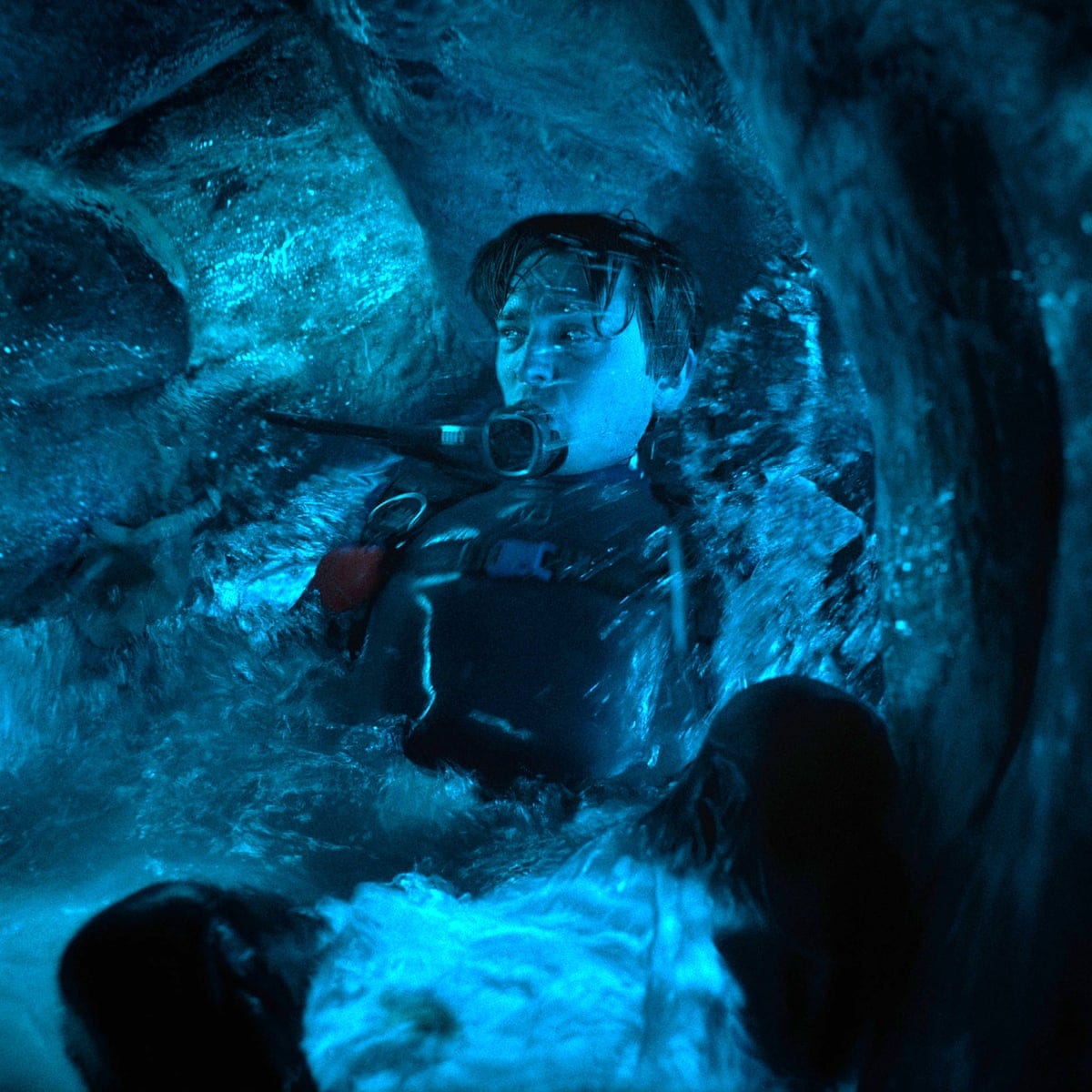
Austin Abrams makes this shame horribly, brilliantly embodied. His screams splinter into thin, shrill, high-pitched cries that seem to come from somewhere younger than his own body. Raw, ragged, humiliating noises: the snot-thick and strangled sounds of sheer animal panic, a body abandoned of composure. Indeed, there is something almost infantile in their pitch, in the catches and the cracks — something unbearable and indecent in watching Jay hear himself making them. Inside the enormous, muscular cavern of the whale, with flesh pressing in and air dwindling to a desperate ration, its dark, gunmetal body becomes a thing of ruptures and disgorgement, mimicking en masse the swollen, carcinomatous coughs of mesothelioma. The horror is wet and close, crushing and intimate: blood in the water, the slickness of viscera, the frantic labour of a body within another body. ‘Phone call from Mom. Jay zones out. Rotten organs inside him too.’ (Kraus, Whalefall, p. 296) Jay has always carried his father’s internal injuries in his own marrow. Grief, too, has a body. It putrefies. It festers. It makes a home of the soft places we have never been touched, and ourselves refuse to touch.
And then there is the traumatogenic age regression. The regulator: that small, constant, palliative instrument through which Jay draws his breath, relies upon for comfort and calm, keeps him buoyant, keeps him alive. Close-ups of biting and teething and tonguing, mouth working around a dummy in wordless, wet little babbles to nobody. It occupies a role almost obscene in its tenderness: a pacifier for a full-grown boy, a substitute for the soothing he has never been able to ask his father to doll out. From within the core of the whale, he calls out for Dad, later for Daddy. Squeaks it out, pops a lung. Under pressure, under terror, under the catastrophic sensation of being swallowed whole, Jay retreats towards and into the smallest version of himself, wet-eyed baby on his bed wanting Dad. He can no longer try to be a man; he just wants to be someone’s boy.
‘I’m not worth you.’
(Yes you are Daddy)
‘I’m going to screw you up.’
(Of course you are Daddy)
‘But maybe I can teach you things.’
(I am sure you will Daddy)[…]
‘I’ll make sure of that. I’ll give you all the tools.’
(I do not want tools Daddy)
‘So when it matters, Son, you’ll know what to do.’
(Daddy all I want is you)(Kraus, Whalefall, p. 362)
Aadoration misshapen and intermittently warm, tangled with humiliation, housed inside the very hands that inflicted the hurt, lodged inside the throat of a sorry, hiccuping, blur-blind animal-boy. Jay’s father is not absolved by his affection, nor does his cruelty make that affection unreal. How terrible, that a wound can become a household custom — an alarm clock, a bonding ritual, a lesson learned. How a child comes to recognise love by the shape of the pain in the palm and the point that accompanies it. This, then, is the terrible arithmetic of the abusive parent: adding tenderness on top of years of terror and arriving at a sum one can live with (‘I don’t know how to fix this, and I’m scared of you’, Whalefall, 2026). The damaging and the damaged and the scraps of attention you find in the difference. Jay doesn’t want to talk about it, doesn’t want to visit the empty casket of his Daddy’s grave, doesn’t want to drive up home from his borrowed life at college to address the father-shaped hole in his family. There is a peculiar selfishness to refusing grief: the desire to preserve the dead exactly as we need them, to keep our resentments pristine, to withhold forgiveness as the last vestige of self-possession they cannot take from us. Jay must learn to carry his father forward without letting his father continue to carry him under. There is no purity nor final absolution in this grief, whereby every injury becomes worthwhile and petrified into gemstone. There is only the awful, ordinary fact that love can and must survive its own failures and ineptitudes, and that a child can spend his entire life starving sick for something he has, in breadcrumbs, already been dished out. Where does the body put all that unspent care? Can you locate the ache when it’s pressed upon? What do you miss about him and why is it everything?
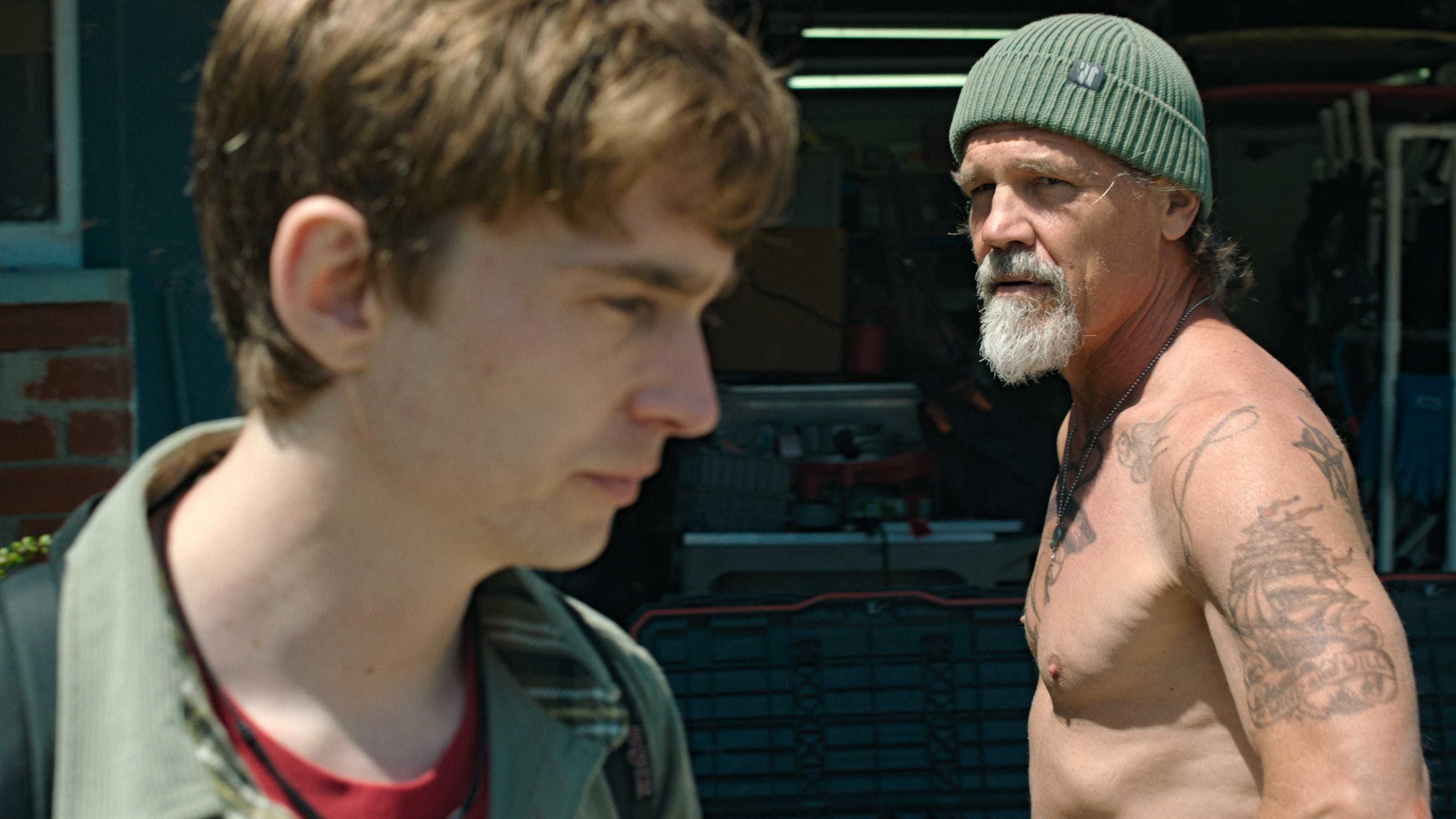
Jay is born a second time from the whale’s wet, lightless innards, almost Aphrodisian in his expulsion though there is nothing clean or immaculate about this birth. He comes out bloodied and raw and raped. Raised gashes ladder his neck and score his jugular; acid brands bloom across his flesh; his ruptured eardrums a strange, Sassoonian echo of the ecstasy of a body finally broken past purpose; his right hand is gone. The soft-lunged, weeping body he once despised has been made into a grotesque reliquary of its own unwilling and unwanted endurance. There is no miraculous conversion of mutilation into manhood. He is still Jay, frightened and bereaved and soft in all the places that matter, tender as a contusion thumbed too hard, a wound worried to weeping. Still a welp. Still a crybaby. Still nineteen and nauseous with the same sick little flutter in his stomach, the same tears caught between his throat and his eyes. Still waiting behind all that scar tissue for Daddy to come wake him for fishing.
🐋🐋🐋